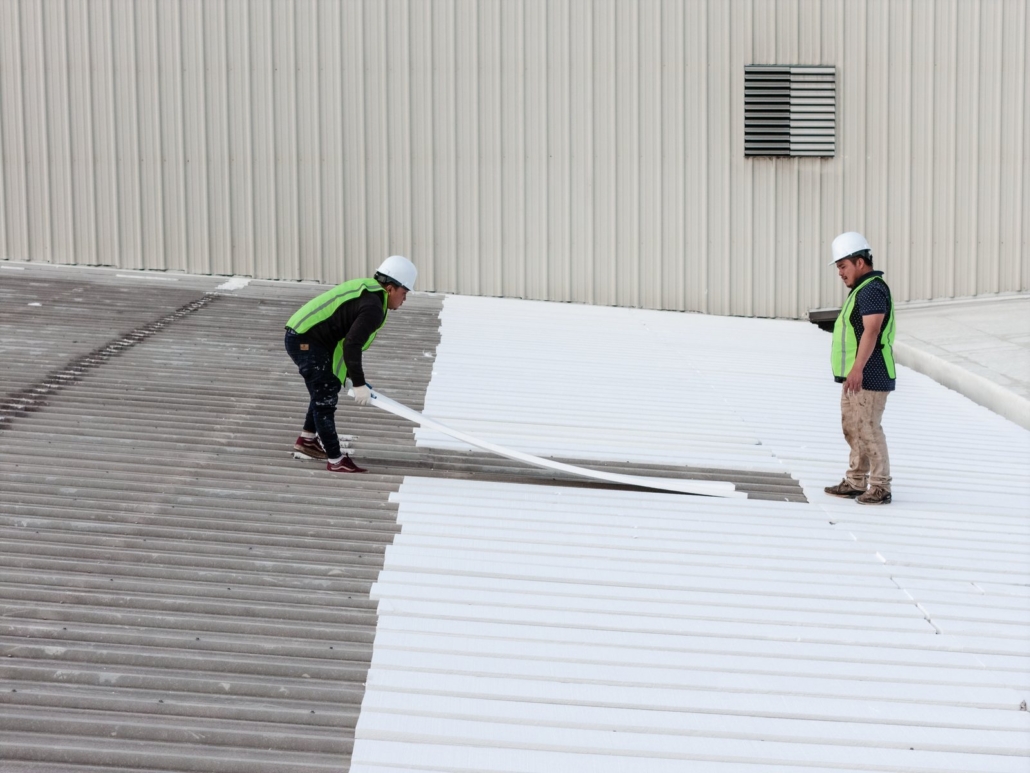
Ghost Leaks: Why the Ceiling Stain Is Never Above the Leak
A stain shows up on a ceiling tile in the back office. Someone goes up on the roof, looks directly above it, and finds nothing. The membrane looks fine. A patch goes on anyway, just in case. Two weeks later, the stain is back.
That’s a ghost leak. “Never” is a strong word, but on a flat or low-slope commercial roof, the stain is rarely right under the spot where water got in. Knowing why can save property managers a lot of money on patches that don’t fix anything.
How a Low-Slope Roof Is Built
Most commercial roofs are layered. From the top down:
- The membrane. A single-ply sheet such as TPO, PVC or EPDM, or a built-up or modified bitumen system. This is the waterproof layer.
- Cover board and insulation. Rigid boards, fastened or adhered in place.
- The deck. Often corrugated metal on commercial buildings, sometimes concrete or wood.
Below that sit the joists, the ductwork, the light fixtures and finally the ceiling grid. Every one of those layers gives water a place to travel before it falls.
Where the Water Actually Goes
Once water gets past the membrane, it follows gravity and the easiest path:
- Along the slope. Flat roofs aren’t truly flat. They’re built with a slight pitch toward drains and scuppers, and water under the membrane follows that pitch too.
- Through the insulation joints. Water runs along the seams between insulation boards and can spread across a wide area before it finds a way down.
- Down the flutes of a metal deck. The ribs of a corrugated deck act like channels. Water can run a long way along one before it reaches a lap, a fastener or an opening where it can drip through.
- Along anything that hangs. Inside the building it follows conduit, ductwork, pipe and joists, then drops wherever it’s convenient: a light fixture, an air diffuser, a ceiling tile.
So the stain marks where the water came out, not where it got in. The entry point can be a long way off, and it’s usually uphill.
The Usual Suspects
When we track a leak on a TPO or other single-ply roof, these are the first places we look:
- Penetrations. Pipes, vents, HVAC curbs, pitch pans and conduit. Every hole cut through a roof is a detail that has to stay sealed.
- Flashing at walls and edges. Where the membrane turns up a parapet wall or meets the edge metal.
- Seams. TPO and PVC seams are heat-welded. A weld that never fully fused, or one that has aged, can open.
- Drains and scuppers. Clogged drains cause ponding, and standing water finds every weak spot.
- Punctures. Dropped tools, service techs walking the roof, debris. A small cut near a rooftop unit is one of the most common culprits.
Why Wet Insulation Makes It Worse
Insulation that gets wet does two things. It stops insulating well, and it holds water. A soaked area can keep feeding a drip long after the rain has stopped, which makes the leak seem random. Over time, trapped moisture can also damage the deck and the fasteners holding the roof down.
That’s why “it only leaks sometimes” is not a reason to wait. The longer water sits under the membrane, the bigger the wet area gets, and the more of the roof ends up being replaced.
How to Find the Real Source
Finding a ghost leak takes method, not guesswork:
- Start upslope of the stain and inspect every penetration, seam and flashing detail along the path water could have taken.
- Map the interior stains with dates and the rain that came before them, so patterns show up.
- Look for signs of wet insulation on the roof surface: soft spots underfoot, blisters or ridges in the membrane.
- Test for moisture where needed. Methods such as infrared scans and core samples can show where insulation is wet and how far it has spread.
Patching the spot directly above the stain is the most common mistake we see. It’s why the same leak gets “fixed” three times. Our commercial leak repair work starts with finding the source.
A Note for Q4: Budget Season
For many property managers and HOA boards, the fourth quarter is when next year’s maintenance and capital budgets get set. If a roof has had repeat leaks, now is the time to find out why, before 2027’s numbers are final.
A ghost leak can be one failed detail and a modest repair. Or it can be a sign that wet insulation has spread under a large part of the roof. Those are very different line items, and you want to know which one you have before the budget is locked. We wrote more about that in Before You Put a Roof Replacement in Next Year’s Budget, Do This.
A Quick Checklist for Property Managers
- Write down the date, location and recent rain every time a stain appears.
- Keep drains, scuppers and gutters clear, especially through leaf season.
- Limit rooftop foot traffic, and ask service contractors to report any damage they cause.
- After a second leak in the same area, ask for an inspection, not just another patch.
- Get a roof inspection on the calendar before your 2027 budget is final.
Talk to a Roofer Who Looks Before Patching
Academy Roofing’s repair technicians are trained in leak detection and repair. We work with property managers, HOA boards and building owners in Acworth, Kennesaw, Marietta and across greater Atlanta, on TPO, PVC and other low-slope roofs.
Schedule a free roof inspection: call 678-384-7663 or visit academyroofing.co.